
Services territoriaux et espace public
T.-B. Kenniff, C. Lefebvre & B. Poitras, dans le cadre du colloque Past Present and Future of Public Space, City Space Architecture, Bologna / En ligne, 7-9 juillet 2026.
The discursive view of public space presents it as something independent of the status of place, emerging from or residing in communications and exchanges across media. With increased online activity, this view seemingly removes materiality from the requirements for spaces to be public. Yet, any emergent public space, consensual or antagonistic, is inextricably tied to material conditions whose affordance gives it structure and meaning. The materiality of the encounter matters, as a matter of concern and as a matter of design.
Public space is an emergent condition of sociomaterial assemblages in which humans and non-humans enter in dialogue. By studying public places that do not readily fit into the category, we seek to locate where and how conditions emerge for potentially meaningful public interaction. These places appear on private and public property, on territorial boundaries or in interstitial areas. They straddle scales, legal statuses, the individual and the collective, and social, political, functional and symbolic dimensions.
Our research investigates a tangible form of these boundary conditions in the province of Québec, Canada: the Bureaux de Services Québec or citizen service points. Their development, over the last 25 years, parallels changing public policy and the way the government presents itself to people, especially for improved and more efficient services, and the acceleration of online services. Behind this project lie fundamental changes to the democratic principles of public space across the province. It is precisely because they are points of contact, places where boundaries become tangible, that the design of public services infrastructure matters. A technocratic view of these points of connection obscures their public dimensions and further dehumanises the political landscape in which they operate. It also diminishes the tangible — and contestable — connections between the social and the political, relegating public space issues to social and leisure infrastructure, or to superficial symbolic gestures.
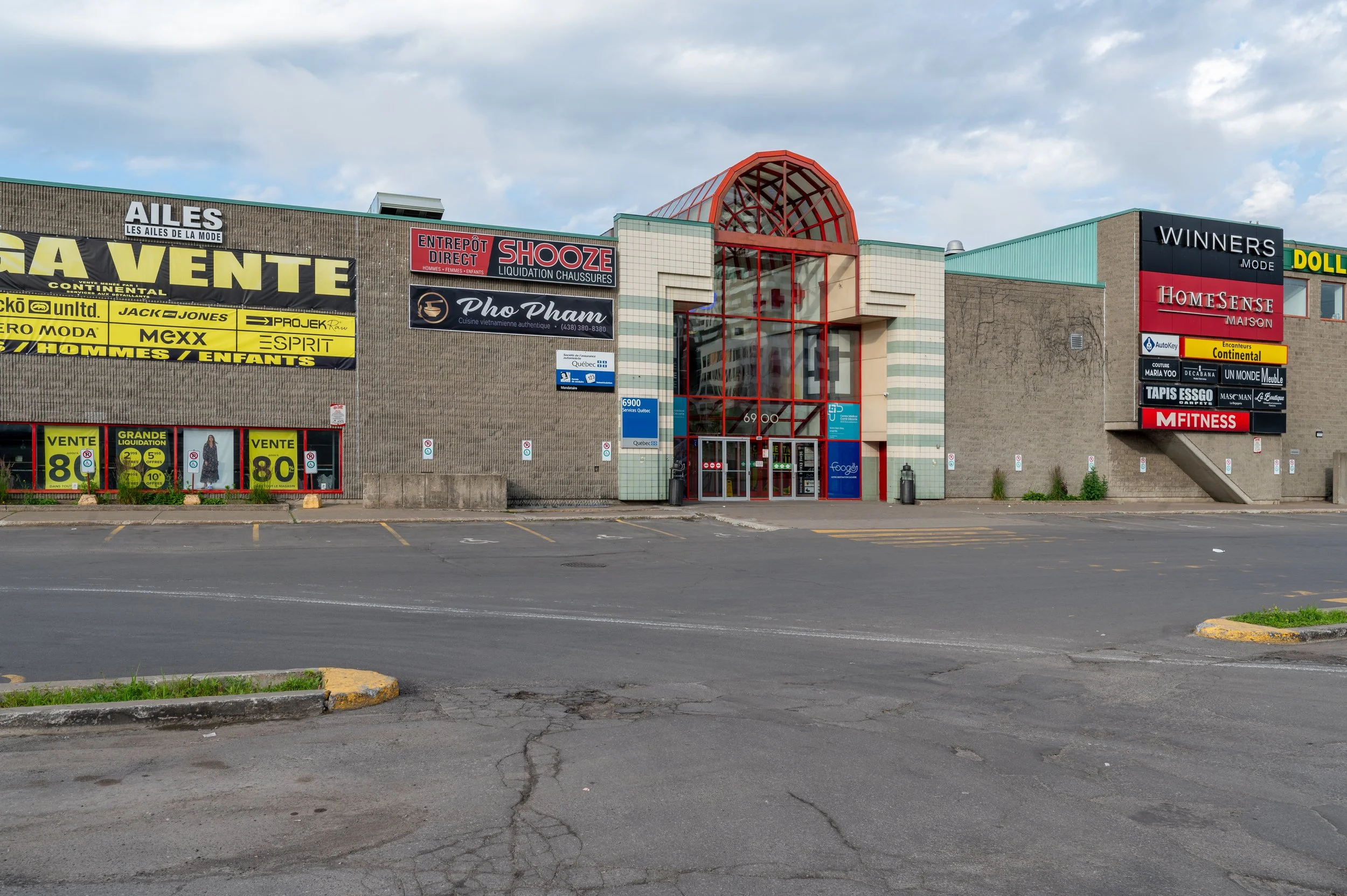
Place Décarie, Montréal
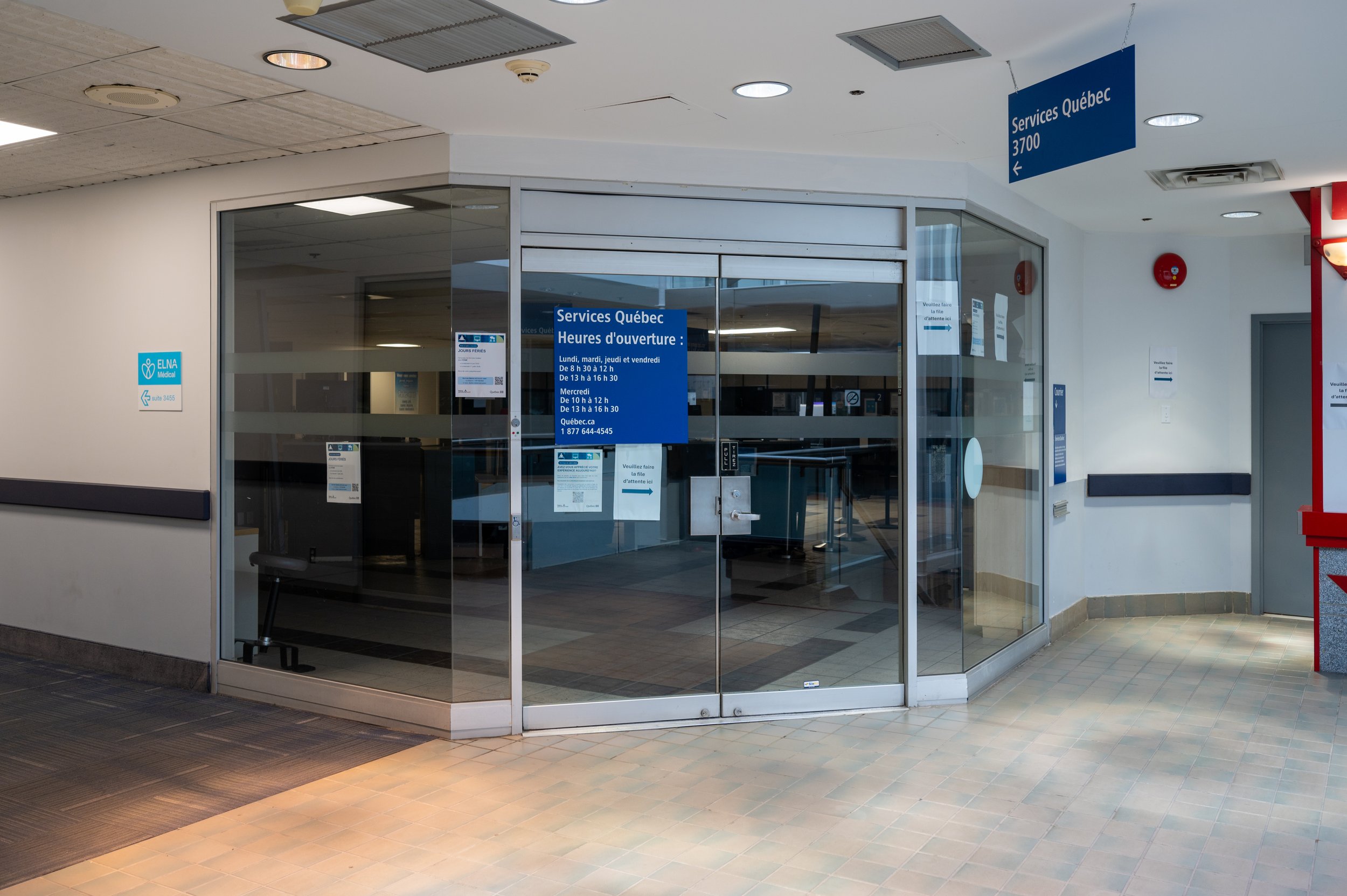
Bureau de Services Québec centre-ouest de Montréal, Place Décarie
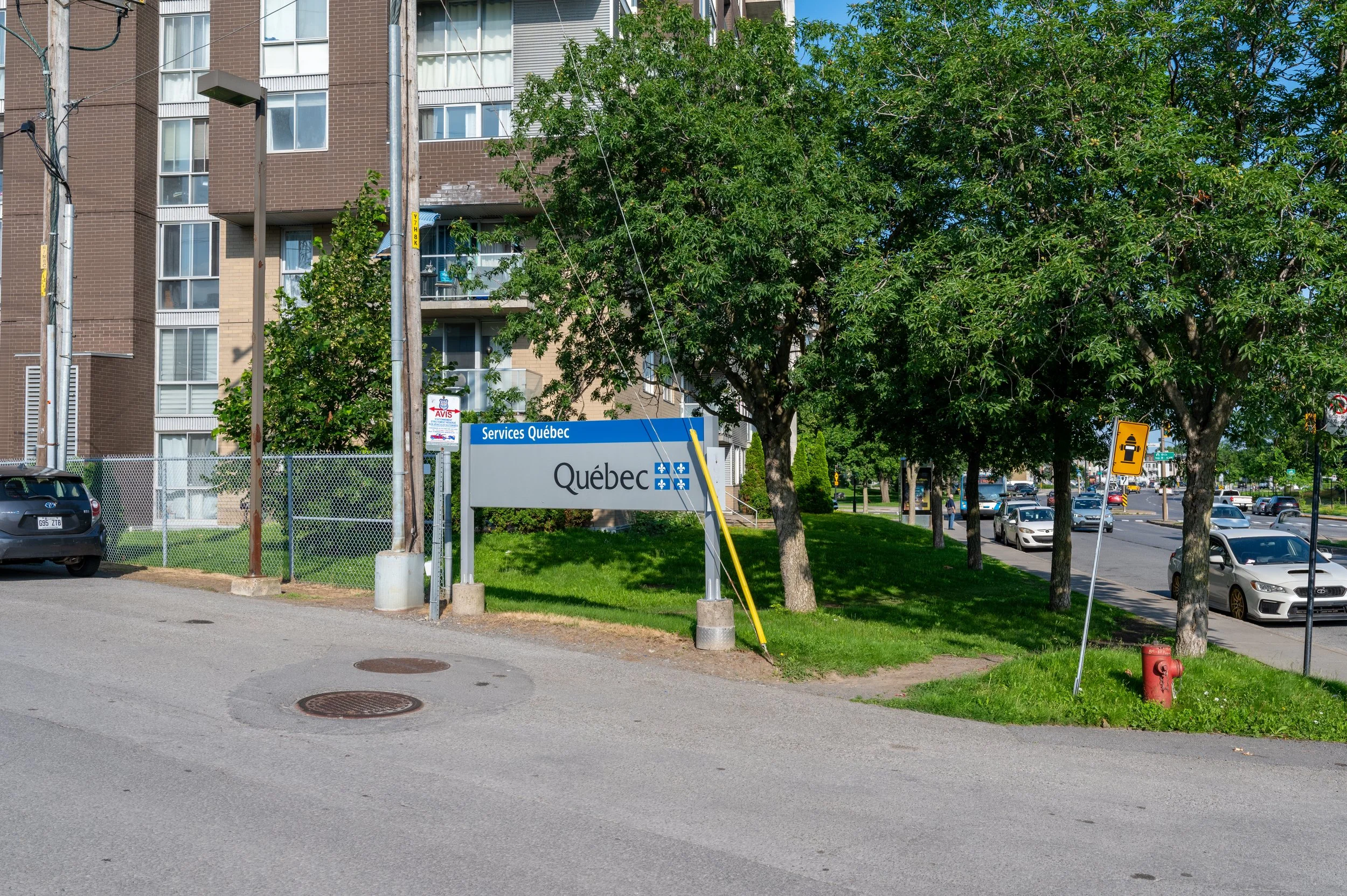
Bureau de Services Québec centre-nord de Montréal, Boulevard Acadie
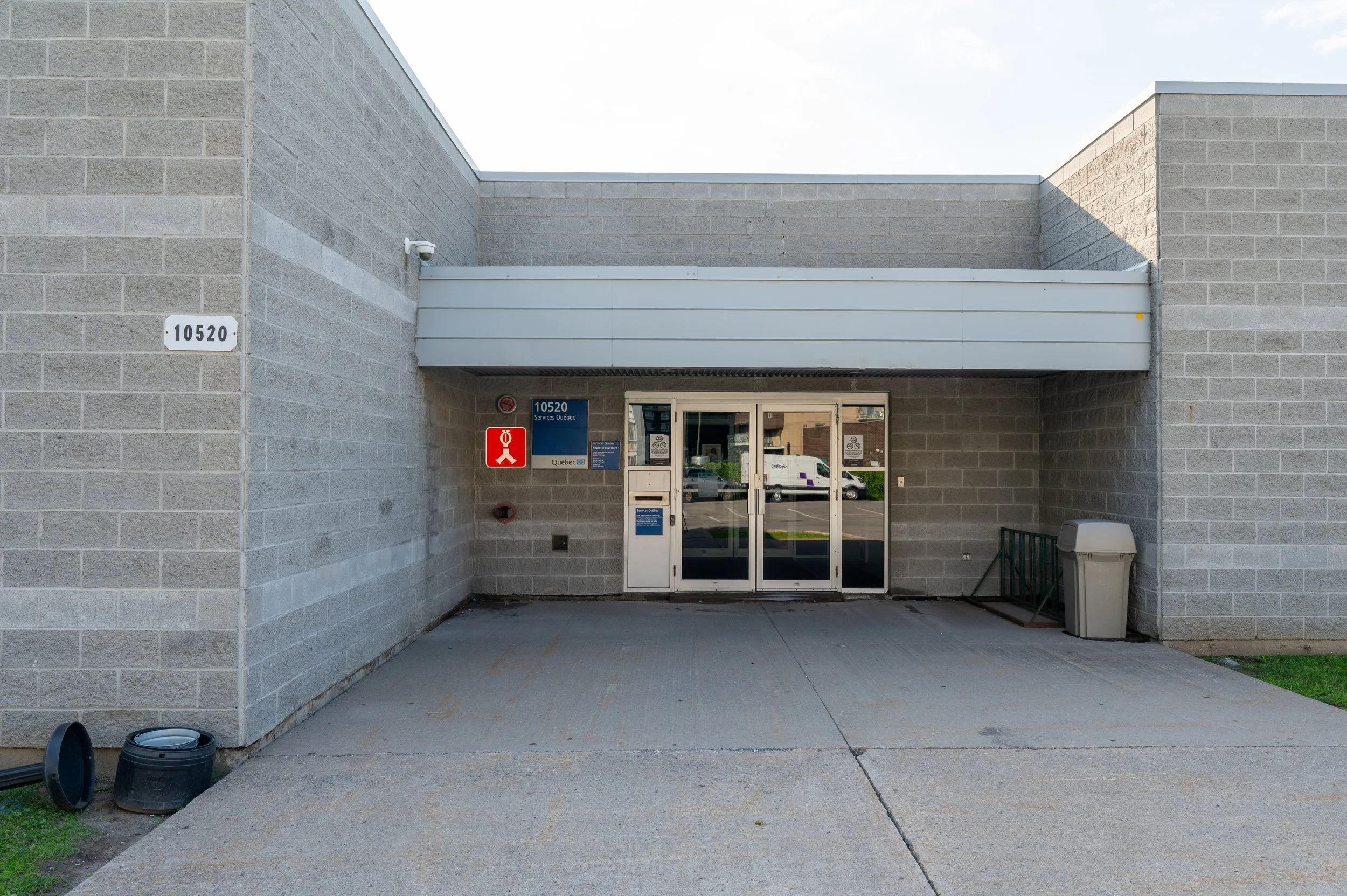
Bureau de Services Québec centre-nord de Montréal, Boulevard Acadie